The global gamification market is projected to reach $30.7 billion by 2025/2026 (Brandmovers). Sports clubs are sitting on one of the most emotionally invested audiences in any consumer vertical. And yet most of them are running digital operations that effectively shut down six days a week. That gap between what clubs have and what they're converting is the real problem worth solving.
The Engagement Cliff Is a Commercial Problem, Not a Content Problem
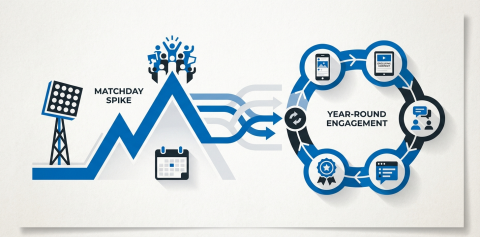
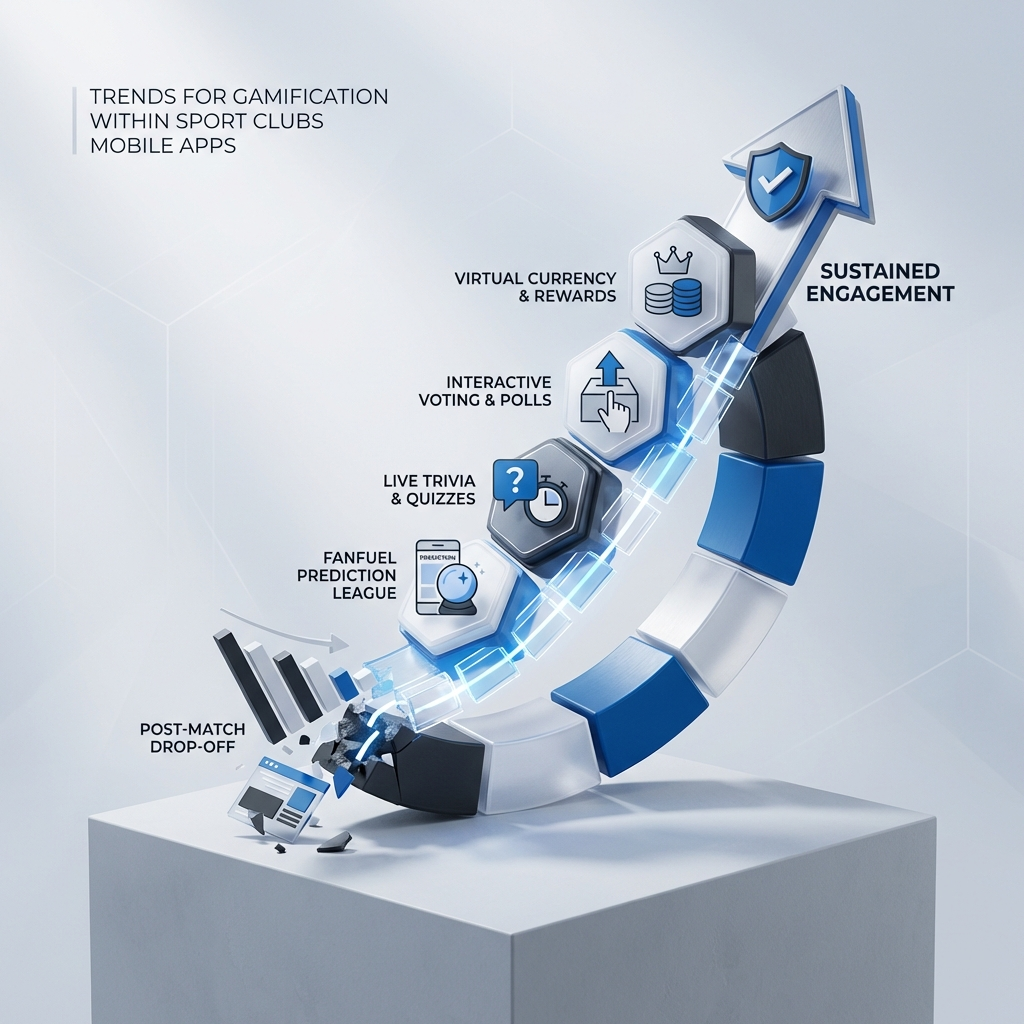
Here's what the engagement cliff actually looks like in practice: a near-total collapse in app opens, push notification responses, shop visits, and content interactions. For six days, the club's digital channel is functionally dormant.
The standard response is to fill that silence with more posts, more video, more scheduled social content that reaches fans on platforms the club does not own or control. More content is the wrong diagnosis.
The problem is structural. Fans have no behavioral reason to open the app on a Tuesday. There's no trigger, no pending action, no reward waiting. The app is a content feed, and content feeds lose to algorithmic platforms every time - because those platforms are specifically engineered to create compulsive interaction loops. Clubs are bringing a newsletter to a behavioral engineering fight.
The commercial consequence is concrete. Sponsors paying for digital exposure are receiving impressions without outcomes. Merchandise sits unsold because the app isn't surfacing it at the moments fans are most receptive. And first-party fan data simply isn't being generated on non-matchday days because there's no interaction to generate it from. Gamification addresses this at the structural level - creating behavioral reasons to open the app, interact, and transact regardless of whether there's a match.
What Gamification in Sports Apps Actually Looks Like
Forget the vague concept. The mechanics driving real results right now are specific.
Pre-match predictors ask fans to call the scoreline or first scorer before kickoff. Attendance check-ins use QR validation at the stadium gate, with streak multipliers rewarding consistent attendance across a season. UGC challenges prompt fans to upload content tied to the matchday experience, earning loyalty points for submissions. Seasonal milestone challenges make the loyalty journey visible and progressive rather than invisible and transactional.
Each mechanic creates a loop, not a one-time interaction. Predict, check in, upload, earn, redeem. Then the cycle resets.
Remote fan parity matters too. A supporter watching from another city should be able to enter the same predictor, participate in the same challenge, and accumulate the same points as someone in the stadium. Locking gamification to physical attendance cuts the majority of a club's digital audience out of the system entirely.
According to TGM Research, 73% of global fans report greater interest in platforms that involve earning rewards through challenges. That's not a marginal preference - it's a clear behavioral signal about what keeps people coming back.
The most effective implementations aren't standalone game features bolted onto an existing app. They're mechanics connected directly to CRM profiles, generating data on fan behavior and purchase intent with every interaction. That connection is what separates a fun feature from a commercial asset.
From Engagement Metrics to Revenue Mechanics: Where FanFuel Fits
AppWorks built FanFuel specifically for this problem - not as a feature set, but as the connective layer between fan behavior and commercial outcomes. Most clubs evaluating gamification tools are looking at feature checklists when they should be asking what the system does with the data those features generate.
Geo-targeted push notifications identify fans physically near the stadium on matchday and send targeted offers that convert foot traffic into shop revenue. The notification isn't a generic reminder - it's a contextual prompt tied to the fan's loyalty status and proximity.
Cedevita Olimpija's implementation shows what UGC integration looks like at the venue level. Fans upload content, earn points, and see their submissions featured on stadium screens - creating a feedback loop where attending and participating is publicly visible and rewarded. The club gets user-generated content, the fan gets recognition, and every submission flows back into the CRM.
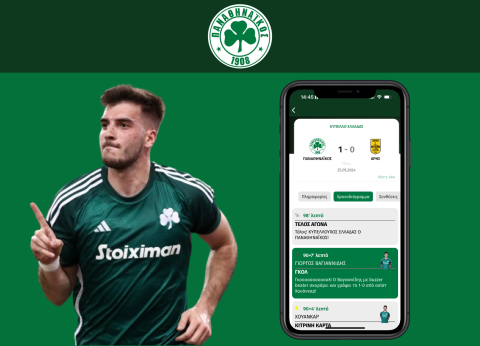
Panathinaikos FC connects shop discounts directly to CRM loyalty milestones, with geo-targeted push notifications driving matchday foot traffic. The commercial loop is closed: fan earns points, reaches a milestone, receives a discount trigger, visits the shop, transacts.
The operational objection clubs raise most often is: who manages all of this? FanFuel handles it automatically. Predictors open and close based on match schedules, QR validation happens at the scan, points are awarded by the system. Staff involvement is minimal. And every interaction generates first-party CRM data - the kind social platforms will never provide.
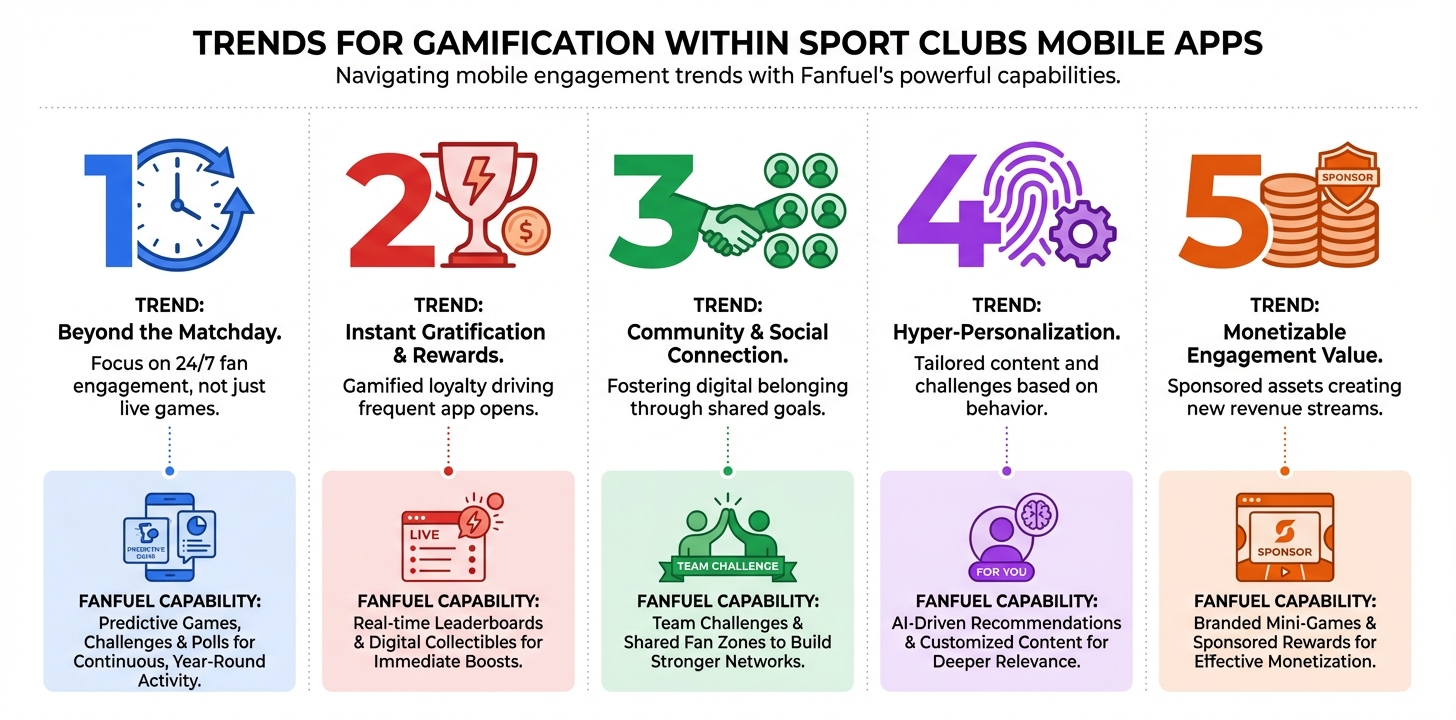
The Three Gamification Trends Shaping Sports Apps Right Now
Behavioral loops over content feeds. The clubs gaining ground are those where the app is part of the weekly ritual - something fans open on Thursday to check their predictor streak, not just on Saturday to watch a highlight. Open Loyalty reports that 43% of companies identify gamification as the most impactful method available for boosting customer engagement. Apps that deliver information are being replaced by apps that create habits.
Sponsor activation through measurable mechanics. Banner impressions don't close sponsorship renewals. Redemption data does. The shift is from passive exposure toward sponsor-branded challenges, geo-triggered offers, and loyalty redemptions that generate trackable outcomes. Clubs that can show a sponsor exactly how many fans redeemed an offer, from which location, and at what point in their loyalty journey are selling something fundamentally more durable than reach.
Loyalty as a membership retention tool. Seasonal challenges make the loyalty journey visible. A fan who can see they've attended two of three required matches and are one step away from a milestone reward has a reason to stay committed. That progressive visibility converts casual supporters into members by making the path to belonging concrete rather than abstract.
Sports app revenue is expected to exceed $13 billion globally by 2034, driven by AI and fan engagement mechanics (Techugo). The clubs building this infrastructure now are not early adopters taking a risk - they're establishing a structural advantage over clubs that will still be debating it in two seasons.
Building the Year-Round Engagement Loop: A Practical Framework
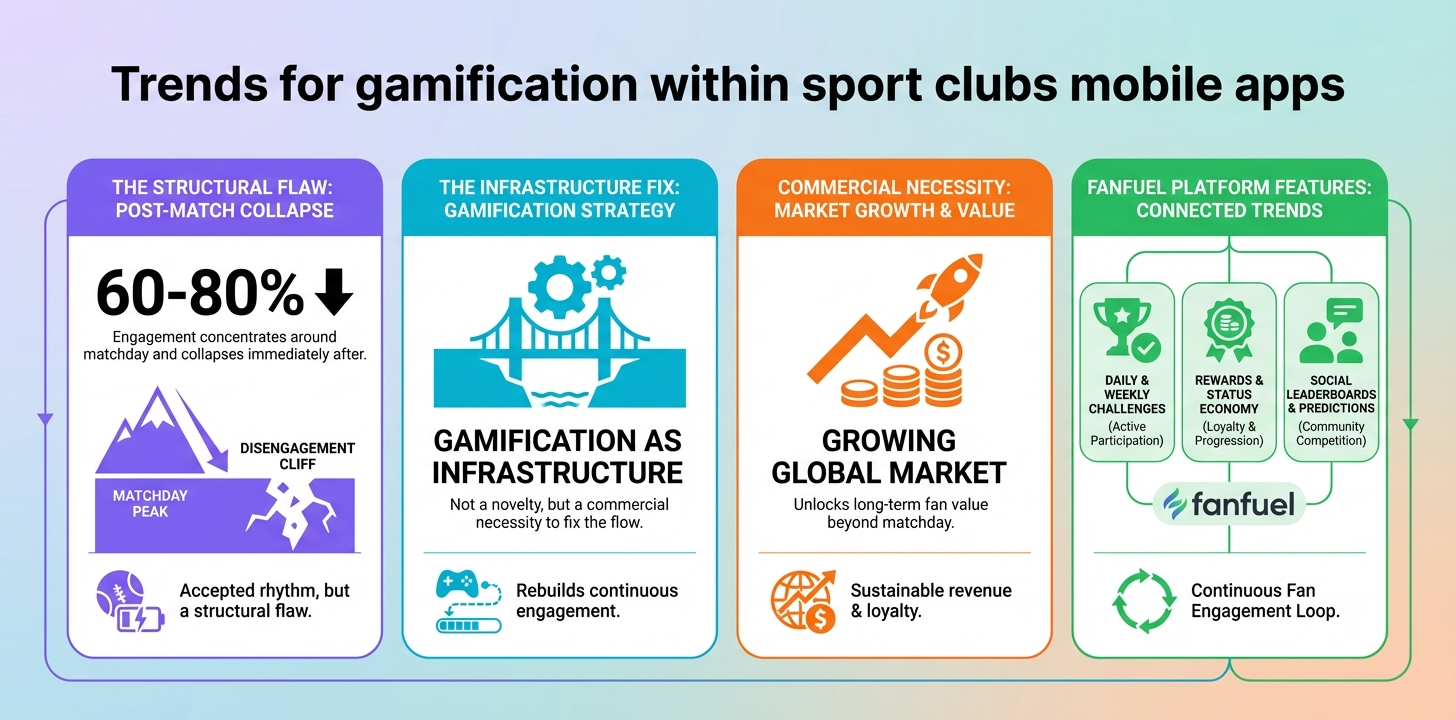
The loop has four stages, each carrying a commercial function beyond the fan experience.
Trigger. A push notification, a scheduled predictor opening, a challenge prompt. This is direct-to-fan reach without paying for algorithmic access to an audience the club already owns.
Action. The fan enters a predictor, scans a QR code at the gate, uploads a photo for a UGC challenge. Each action generates a first-party data point: this fan attends home matches, this fan engages with prediction mechanics, this fan's last purchase was a jersey in October. Over a season, that's a behavioral profile informing every subsequent commercial decision.
Reward. Points awarded, streak multiplier activated, milestone progress updated. Habit formation happens here. The reward doesn't need to be large - it needs to be consistent and visible. Fans who can see their progress are fans who return to advance it.
Activation. Points redeemed at the shop, a sponsor offer unlocked, content featured on the stadium screen. This is where engagement converts to revenue - a customer transaction that wouldn't have happened without the behavioral loop upstream.
A club running this loop across a full season isn't operating a fan engagement program. It's running a year-round digital revenue channel - one that generates first-party data, activates sponsors with measurable outcomes, and converts passionate fans into a predictable commercial relationship. Gamification in sports apps, built this way, isn't a feature upgrade. It's the structural fix for a problem that more content will never solve.
If your club's digital activity looks like a heartbeat monitor - spiking on matchday and flatlining in between - FanFuel is built to change that. Get in touch with the AppWorks team to talk through what a gamified loyalty framework looks like for your specific club, your sponsor commitments, and your fanbase.